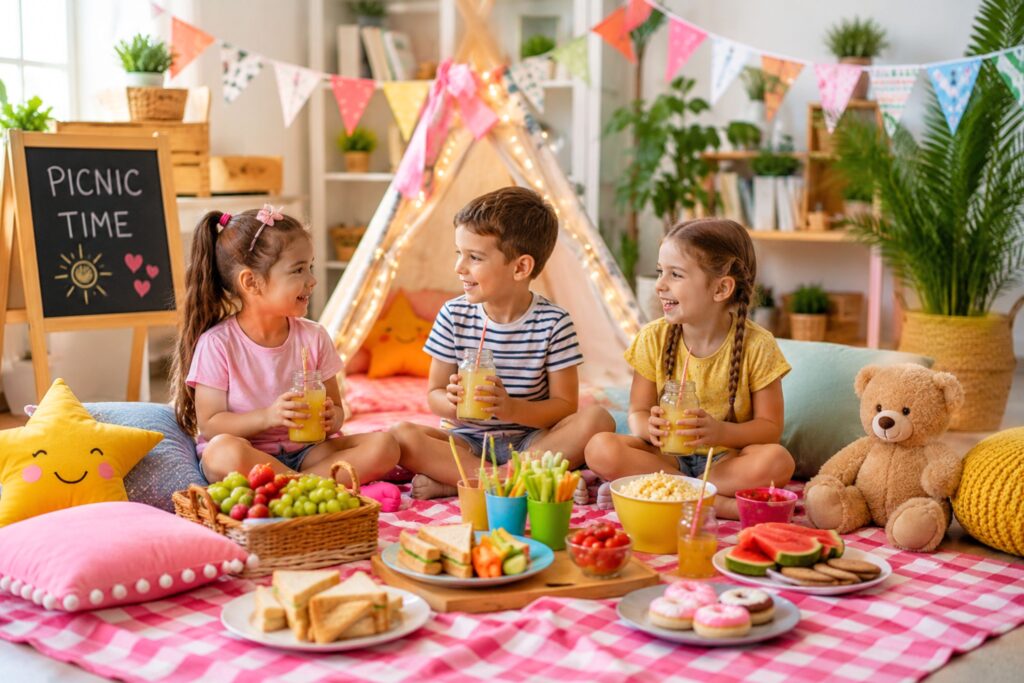
Kids no longer need expensive play zones or packed entertainment centers to stay engaged. The biggest shift happening inside modern parenting is simple: experiences at home are becoming more creative, more personalized, and often more memorable than traditional outings.
That matters because children respond less to “where” they are and more to how interactive the experience feels. A simple backyard blanket setup with themed snacks, games, and storytelling can hold attention longer than a crowded venue.
The result is changing how families plan weekends, birthdays, rainy afternoons, and screen-free activities. Parents are moving from passive entertainment to experience-based play at home — and picnic ideas for kids at home fit perfectly into that shift.
Why Home Picnics Work Better for Younger Kids
Home picnics reduce overstimulation while giving children more freedom to play naturally.
Large public spaces often create too many distractions. Noise, crowds, waiting lines, and rigid schedules can make younger children tired faster. A home setup removes those pressures.
That changes the energy completely.
Kids become more involved when they can help build the picnic space, arrange snacks, choose games, or decorate blankets. The picnic stops feeling like an event created for them and starts becoming something they helped create themselves.
Parents also gain flexibility.
You can pause for naps, adjust activities instantly, avoid travel stress, and reuse items already available at home. That makes at-home picnic experiences easier to repeat regularly instead of saving them only for special occasions.
Indoor Picnic Ideas for Kids for Rainy Days
Indoor picnics work best when the environment feels visually different from everyday home routines.
The easiest mistake is laying down a blanket and stopping there. Kids notice atmosphere more than adults do. Small environmental changes create excitement quickly.
Turn the living room into a “campground” using pillows, fairy lights, or blankets draped over chairs. Build a reading corner beside the picnic setup. Use battery candles for pretend campfire storytelling.
Movie-themed picnics also work especially well indoors.
Instead of simply watching a movie, build activities around it:
- Jungle snacks for animal movies
- Space-themed sandwiches for sci-fi cartoons
- Mini treasure hunts before pirate films
The experience becomes interactive instead of passive.
Another strong option is the “color picnic.”
Choose one color for the entire setup:
- Yellow foods
- Blue decorations
- Green cups
- Matching clothing
Children love visual consistency because it feels playful and intentional.
Backyard Picnic Ideas That Keep Kids Active
Outdoor home picnics succeed when movement becomes part of the experience.
Children rarely stay seated for long. The most successful backyard picnics include activity stations around the blanket area instead of expecting kids to sit quietly.
Simple examples include:
- Bubble zones
- Chalk drawing contests
- Obstacle courses
- Water balloon games
- Mini scavenger hunts
Movement creates rhythm.
Instead of one long activity, kids cycle between eating, exploring, and playing. That prevents boredom without requiring expensive equipment.
Water-based setups become especially effective during warmer months.
A sprinkler beside the picnic blanket instantly changes the atmosphere. Frozen fruit snacks, mini popsicles, and reusable water cups make the picnic feel seasonal rather than generic.
The key difference is immersion.
Children remember experiences that feel transformed from normal daily routines.
Themed Picnic Ideas Create Stronger Engagement for Children
Themes help children emotionally connect with activities faster.
Without a theme, a picnic is simply food on a blanket. With a theme, it becomes a story.
That psychological shift matters because kids naturally engage through imagination.
Popular at-home picnic themes include:
- Dinosaur explorers
- Princess garden tea parties
- Superhero training camps
- Space missions
- Safari adventures
- Teddy bear picnics
The strongest themes combine food, games, and decorations into one consistent experience.
For example, a safari picnic could include:
- Animal-shaped sandwiches
- Toy binoculars
- Jungle sounds
- Hidden stuffed animals
- Leaf decorations
Everything reinforces the same narrative.
This layered structure keeps attention longer because children continuously discover new details connected to the same idea.
Picnic Food for Kids Should Prioritize Interaction
The best picnic foods are not necessarily the healthiest or most decorative. They are the easiest for children to interact with independently.
Kids enjoy meals more when they can build, stack, dip, or customize them.
That changes food from consumption into activity.
Strong picnic food ideas include:
- DIY mini sandwiches
- Fruit skewers
- Snack boxes
- Mini pancakes
- Cheese cubes
- Yogurt cups with toppings
- Cookie decorating stations
Finger foods work better than large meals because they support movement and play between bites.
Presentation also changes behavior.
Cutting sandwiches into stars, animals, or hearts immediately increases engagement without adding complexity. Children react strongly to novelty, especially visual novelty.
This is why bento-style picnic trays continue gaining popularity across Pinterest, Instagram, and parenting communities.
Parents are discovering that small visual upgrades dramatically increase participation.
Screen-Free Picnic Activities for Kids Are Becoming More Valuable
One hidden reason home picnics are growing in popularity is digital fatigue.
Parents increasingly search for activities that reduce passive screen time without feeling restrictive. Picnics solve that naturally because they combine movement, creativity, conversation, and sensory play.
The most effective screen-free picnic activities include:
- Nature bingo
- Drawing challenges
- DIY crafts
- Storytelling circles
- Music games
- Shadow puppet contests
- Treasure hunts
These activities succeed because they create participation loops.
Kids stay engaged when they actively contribute instead of simply watching something happen.
That distinction matters more now than it did a few years ago.
Entertainment used to compete for attention. Now it competes for interaction.
Budget-Friendly Picnic Ideas Often Feel More Authentic
Children usually value creativity more than expensive setups.
A cardboard “food truck” beside a picnic blanket can create more excitement than costly decorations. Homemade tickets, handwritten menus, and DIY games often feel more personal and memorable.
This is why many viral parenting ideas spread quickly on platforms like TikTok and Pinterest.
The most shared picnic content is rarely luxurious. It is relatable, repeatable, and emotionally warm.
Simple low-cost ideas include:
- Breakfast picnics in pajamas
- Balcony sunset snacks
- Stuffed-animal tea parties
- Floor picnics beside indoor forts
- Backyard “restaurant” roleplay
The emotional experience matters more than production quality.
Kids remember attention and imagination longer than expensive details.
Seasonal Picnic Ideas Make Home Activities Feel New Again
Seasonal variation prevents repetition fatigue.
Many parents stop doing at-home activities because the setup feels repetitive after several weekends. Seasonal adaptation solves that problem easily.
Summer picnic ideas:
- Water games
- Frozen treats
- Evening backyard movie picnics
Autumn picnic ideas:
- Pumpkin decorating
- Leaf scavenger hunts
- Apple-themed snacks
Winter indoor picnic ideas:
- Hot chocolate stations
- Blanket forts
- Snow-themed crafts
Spring picnic ideas:
- Flower hunts
- Mini gardening activities
- Butterfly decorations
The season itself becomes part of the entertainment structure.
That keeps familiar activities feeling fresh without requiring completely new planning every time.
Social Media Changed How Parents Plan Kids’ Activities
Platforms like Pinterest, Instagram, TikTok, and YouTube reshaped parenting inspiration systems.
Parents no longer search only for “things to do.” They search for experiences that are visually engaging, easy to recreate, and emotionally meaningful.
That changes content discovery patterns dramatically.
Short-form videos especially accelerated the popularity of:
- Indoor blanket picnics
- Aesthetic snack trays
- Themed backyard setups
- Sensory picnic stations
- DIY activity tables
But the deeper trend is not visual aesthetics.
It is accessibility.
Parents now expect activities to be flexible, affordable, and adaptable to small spaces, apartments, and unpredictable schedules.
Home picnic ideas fit that expectation perfectly.
Home Picnics Are Becoming a Modern Family Ritual
Home picnics are no longer backup plans for bad weather or budget limitations. They are becoming intentional family experiences built around creativity, interaction, and emotional connection.
The shift matters because children increasingly remember experiences that feel immersive rather than expensive.
Search behavior reflects this change clearly. Parents are actively looking for:
- low-stress activities
- screen-free entertainment
- affordable family experiences
- creative indoor play
- repeatable weekend ideas
Picnic ideas for kids at home sit directly at the center of all those needs.
And that is why these simple setups continue growing in popularity across modern parenting culture.
Because the most memorable childhood experiences often happen in ordinary spaces transformed by imagination.
FAQs
How can parents organize a kids’ picnic at home in a small apartment?
Small spaces can still support creative indoor picnic activities when the setup focuses on zones instead of size. Parents can use floor cushions, foldable trays, themed decorations, and compact sensory activities to transform a living room or bedroom corner into a playful picnic area. Balcony picnics, hallway treasure hunts, and blanket forts also work well in apartments with limited outdoor access.
What are the best educational picnic activities for preschoolers at home?
Educational picnic ideas for preschoolers should combine movement, sensory play, and simple learning tasks. Alphabet scavenger hunts, color-matching snack games, counting activities with fruit pieces, and storytelling cards help children develop cognitive and communication skills while staying entertained. Interactive activities usually keep preschoolers engaged longer than passive games.
Which picnic setup works best for toddlers who lose focus quickly?
Toddlers respond better to short activity cycles instead of long structured sessions. The most effective toddler picnic setups include multiple mini stations such as snack corners, bubble play, soft toys, water bins, and music activities. Rotating activities every 10–15 minutes helps maintain attention and reduces frustration.
How do you make a home picnic feel special without buying decorations?
Children usually react more strongly to atmosphere and participation than expensive decorations. Rearranging furniture, using bedsheets as tents, creating handmade signs, or adding fairy lights can completely change how a room feels. Personalized touches like homemade menus or themed music often create a stronger emotional connection than store-bought decor.
What are some healthy picnic snacks kids actually enjoy eating?
Healthy picnic foods become more appealing when they are visually interactive and easy to handle. Fruit kabobs, mini wraps, yogurt parfaits, vegetable cups with dips, homemade popcorn, and frozen banana bites are popular options because they combine nutrition with fun presentation. Bite-sized foods also reduce mess during active play.
How can parents create screen-free entertainment during a picnic at home?
Screen-free picnic entertainment works best when activities encourage participation instead of observation. Story-building games, scavenger hunts, craft stations, dance challenges, and pretend-play scenarios help children stay mentally engaged without relying on tablets or television. Structured interaction usually reduces requests for screens naturally.
Are themed picnics helpful for child development?
Themed picnic experiences support imagination, communication, and emotional development because children actively roleplay and problem-solve within a creative setting. Themes such as camping, space exploration, or animal adventures encourage storytelling, social interaction, and independent thinking. Imaginative play also improves attention span and creative confidence over time.
What should parents avoid when planning picnic activities for kids at home?
Overcomplicated schedules and excessive activities often reduce enjoyment because children become overwhelmed or distracted. Parents should avoid rigid timelines, difficult crafts, or long seated activities that interrupt natural play patterns. Flexible setups with simple transitions usually create a calmer and more enjoyable experience for both children and adults.
How can siblings of different ages enjoy the same picnic setup?
Mixed-age picnic activities work best when they include layered participation levels. Older children can help organize games, decorate the picnic area, or lead scavenger hunts, while younger kids focus on sensory play and simple tasks. Shared activities like storytelling, music games, and collaborative crafts help reduce age-related frustration.
What are the best backyard picnic ideas for energetic children?
Energetic children usually enjoy picnic setups that combine food with physical movement. Obstacle courses, relay races, water balloon games, trampoline snack breaks, and outdoor treasure hunts keep activity levels high while maintaining the picnic atmosphere. Active play also helps children stay socially engaged longer during group picnics.
Can home picnics help improve family bonding?
Home picnics create uninterrupted family interaction because they remove many outside distractions associated with restaurants or entertainment venues. Shared activities, collaborative games, and relaxed conversations encourage stronger communication between parents and children. Repeated family rituals also help children build emotional security and positive long-term memories.
Why are at-home picnic ideas becoming more popular among parents?
At-home picnic activities are growing because families increasingly prioritize flexible, affordable, and low-stress experiences. Parents want activities that support creativity, reduce screen time, and fit unpredictable schedules without requiring expensive travel or reservations. Social media platforms have also accelerated interest by making creative picnic setups easier to discover and recreate.
✨ Love picnics as much as we do?
Join our community and get fresh picnic ideas, tips, and inspiration straight to your inbox. No spam, just simple ways to make every picnic special. 🌿🍓