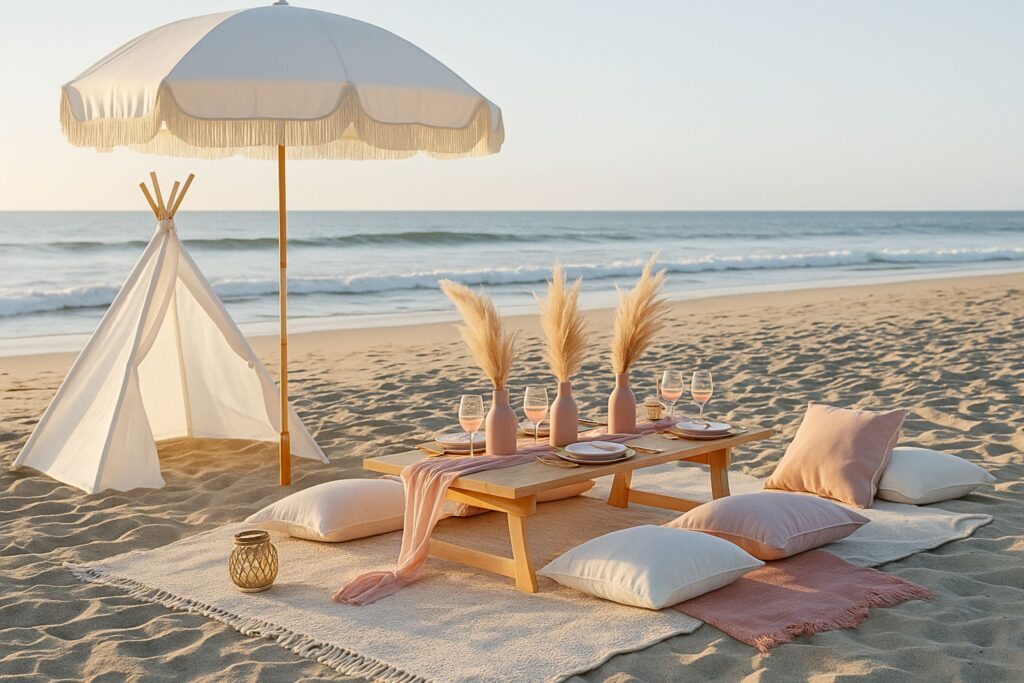
Picnicking on a sandy beach can be relaxing, but finding the proper seating is essential for comfort and stability. Sand shifts easily, making some chairs unstable and blankets prone to bunching or blowing away.
The best cozy picnic seating for sandy beaches combines a stable base, supportive seating, and easy portability.
This guide explains which seating options work best, how to keep them secure, and ways to make your setup comfortable for hours by the water.
What’s the Best Base for Cozy Picnic Seating on Sand?
The base of your beach picnic setup determines how comfortable and practical it will be. A large waterproof picnic blanket, sand mat, or beach rug with a non-slip backing is the most reliable choice. This type of base keeps you dry, prevents fabric from sticking to damp sand, and adds a layer of insulation between you and the ground.
Materials like ripstop polyester, woven polypropylene, or outdoor canvas are ideal because they resist moisture, dry quickly, and are easy to shake clean.
To keep your base secure on windy days, anchor the corners with sandbags, smooth rocks, or heavy picnic gear like a cooler or basket. If your blanket has built-in corner loops, you can also use tent pegs for extra stability.
Avoid lightweight single-layer fabrics as they can blow around or bunch up when people move.
For added comfort and style, layer a soft woven rug, cotton throw, or padded beach mat on top of the waterproof base. This extra layer not only improves cushioning for longer seating sessions but also helps define the picnic space visually.
Opt for lighter colors to reflect heat or patterned textiles to disguise any stray sand.
A well-prepared base also makes cleanup easier—when the picnic ends, shake off the top layer, fold the waterproof bottom layer, and keep sand out of your bags and car.
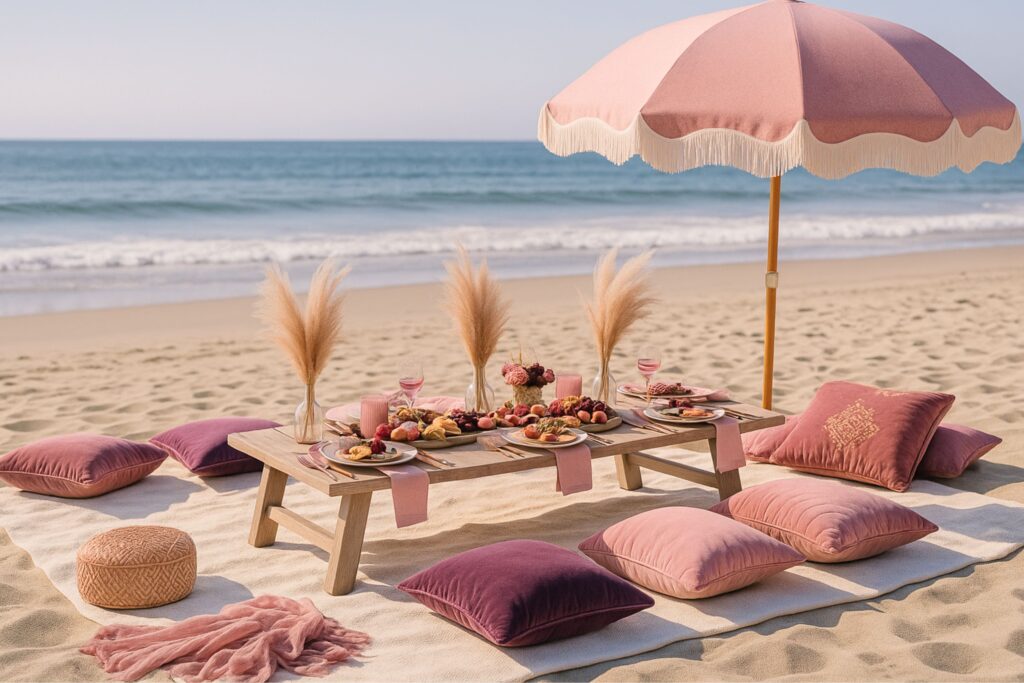
What Picnic Seating Works Best on Sandy Beaches?
The most practical seating for sandy beaches is lightweight, stable, and able to adapt to the shifting surface. Floor cushions, oversized poufs, and outdoor bean bag loungers are excellent for a low, relaxed style. Their soft, flexible filling molds to your body and the sand beneath, distributing weight evenly so you stay comfortable for more extended periods.
Choose cushions with water-resistant covers made from fabrics like polyester or acrylic to prevent moisture and salt damage.
If you prefer more structure and back support, low-profile beach chairs with wide legs or a flat base work well. These designs spread weight over a larger area, preventing the legs from sinking into soft sand.
Folding models are easy to carry and store, while reclining styles let you adjust seating positions for comfort.
For the most versatile setup, combine floor seating and low chairs. Cushions create an inviting lounge zone for casual relaxation, while chairs provide ergonomic support for guests who prefer to sit upright.
This mix caters to different comfort needs, making your beach picnic space functional and welcoming for everyone.
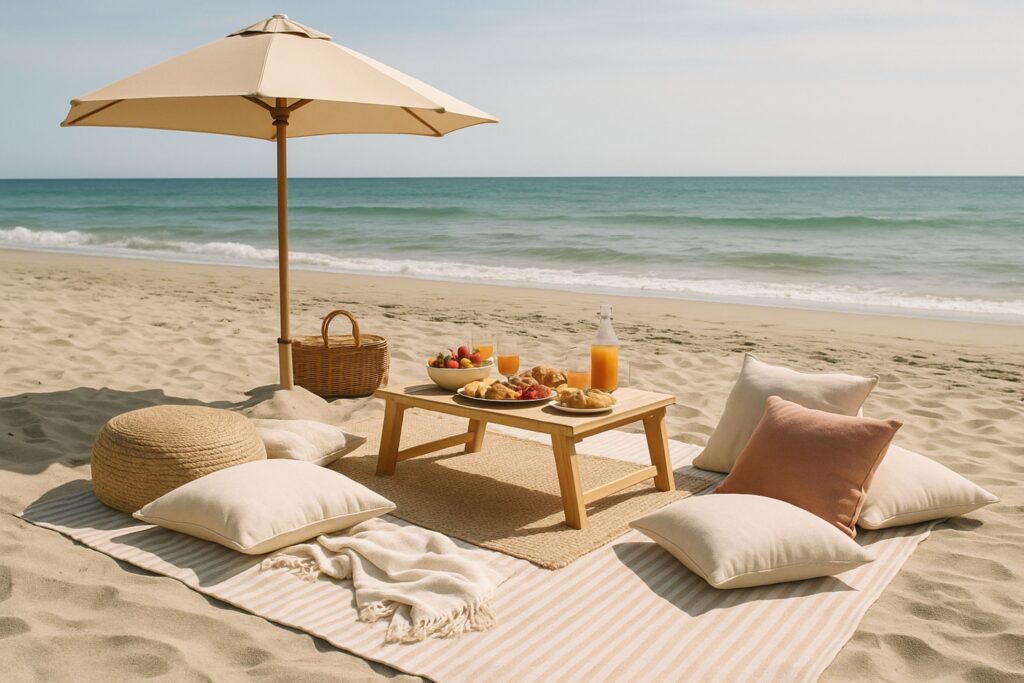
Can Portable Tables Be Used on Sand?
Yes. Portable, low-height tables are one of the most practical additions to a beach picnic, as they keep food, drinks, and utensils elevated and protected from sand. Models designed for camping or beach use often feature wide legs, flat panels, or cross-braced bases that distribute weight more evenly, preventing the table from tilting or sinking into soft ground.
For easy transport, roll-up bamboo, aluminum, or slatted wooden tables are ideal—they’re lightweight, fold compactly, and set up in seconds. Many come with carrying bags, making them easy to bring along with other picnic gear.
If you prefer a rustic or improvised approach, a sturdy wooden crate, folding tray, or even a wide serving board placed on stable supports can double as a functional table surface.
When setting up on sand, position the table legs on slightly compacted areas or use small flat boards under each leg to add stability.
How Can Sand & Wind Be Managed at a Beach Picnic?
A comfortable beach picnic setup needs to stay stable despite shifting sand and gusts of wind. Anchoring your base layer—whether it’s a blanket, mat, or rug—is the first step.
Use sandbags, smooth rocks, tent pegs, or heavier items like coolers, baskets, or storage boxes placed at the corners to keep it from lifting or sliding. Some picnic mats have built-in corner loops, making it easy to secure them with stakes.
On windy days, choose thicker, heavier fabrics for blankets, rugs, and cushions. Materials like canvas, woven cotton, or outdoor-grade polyester resist flapping better than thin, lightweight fabrics that can easily catch the wind.
You can also reduce disruption by placing seating and tables closer together, which helps shield lighter items from direct gusts.
To manage sand intrusion, keep walkways clear and encourage guests to brush off their feet before entering the picnic area. Position food and drinks on elevated surfaces like portable tables to avoid contact with blowing sand.
A well-anchored setup not only keeps your seating in place but also protects your comfort and prevents constant adjustments throughout the day.
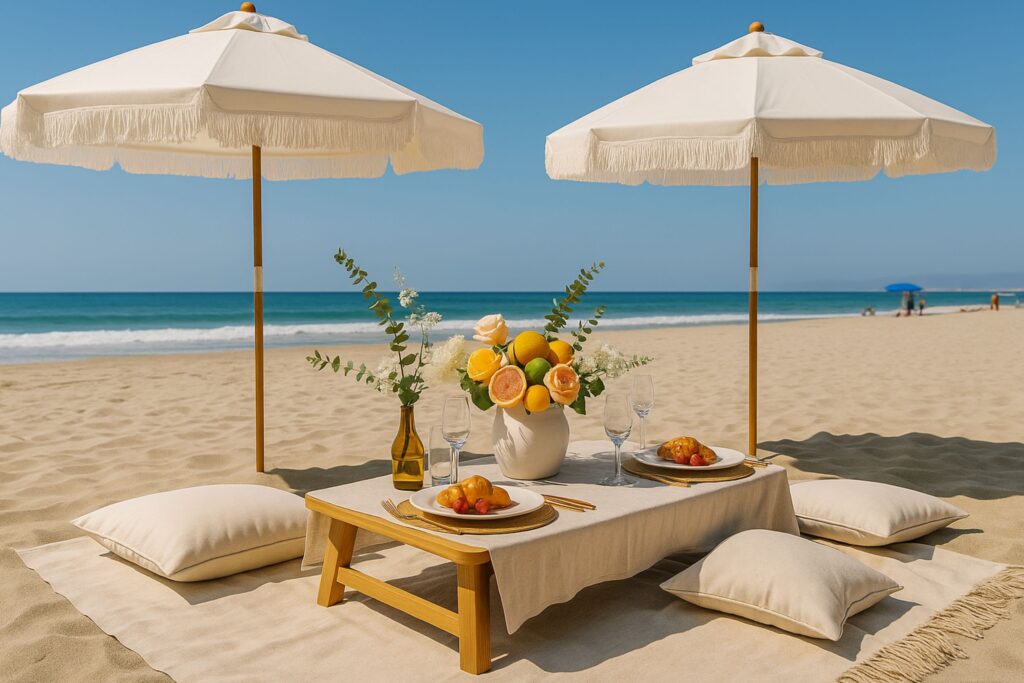
How Can Shade Be Added for Picnic Comfort?
Adding shade is essential for keeping your beach picnic area cool, protecting skin from UV exposure, and maintaining food freshness. The most effective options are a large beach umbrella, a portable canopy, or a pop-up shade tent. Each provides ample coverage and can be set up quickly without heavy equipment.
For stability on sand, use a screw-style sand anchor or a base designed to be filled with sand or water. This prevents tipping and keeps the shade in place even in moderate wind.
When using a canopy or shade tent, secure the corners with stakes or weighted bags for extra safety.
Position the shade slightly upwind of your seating area. This arrangement reduces glare, keeps direct sunlight off your picnic space, and helps act as a windbreak for lightweight items such as napkins or paper plates.
What Personal Touches Enhance Beach Picnic Comfort?
Small details can make a big difference in turning a basic beach picnic idea into a cozy, welcoming space. Layering textiles—such as rugs, throws, and multiple cushions—adds softness underfoot and makes seating more comfortable for extended periods.
Using fabrics in neutral, pastel, or soft earthy tones complements the beach setting and creates a calming visual effect, while patterned textiles can hide minor sand marks and spills.
Extra outdoor pillows provide support for lounging or leaning back, and a few lightweight blankets ensure warmth as the sun goes down or the breeze picks up. If your picnic is during cooler evenings, consider bringing insulated throws or fleece blankets for added comfort.
Arrange seating so that guests face the water or a shared scenic view, which enhances the atmosphere and encourages conversation.
Adding small side trays for drinks, LED candles for soft lighting, or decorative baskets for organizing items can further improve the experience.
These thoughtful touches help create a beach picnic setup that feels as comfortable and inviting as an indoor lounge—just with the added beauty of the sea as your backdrop.
Quick Beach Picnic Seating Checklist
Base: Use a waterproof-backed blanket, sand mat, or outdoor rug with a non-slip underside to keep you dry and stable on soft sand. 🏖️
Seating: Bring floor cushions, poufs, or low beach chairs with wide legs to prevent sinking and provide comfort for different sitting preferences. 🪑
Table: Pack a compact, low-height portable table to keep food, drinks, and utensils elevated and free from sand. 🍽️
Anchoring: Secure your setup with sandbags, smooth rocks, or other weighted items to prevent blankets, rugs, and shade structures from shifting in the wind. 🪨
Shade: Set up a beach umbrella, canopy, or pop-up tent with a sand anchor or weighted base for UV protection and cooler seating. 🌤️
Comfort Extras: Add soft throws, layered rugs, and decorative pillows to make the space more inviting and comfortable for more extended stays. 🛋️
FAQs
What is the easiest seating to carry to the beach?
Inflatable loungers and foldable low chairs are light, compact, and quick to set up, making them convenient for beach trips.
Can regular indoor cushions be used on sand?
Yes, but they should be placed on a waterproof layer to avoid moisture damage and staining from sand.
Are bean bag chairs suitable for beach picnics?
Outdoor-friendly bean bag chairs made from water-resistant fabric work well, but they can be bulky to carry unless designed for portability.
What table height is best for sandy beaches?
Low tables, typically 10–15 inches high, are most stable on sand and comfortable for floor-seating setups.
How can I prevent my seating from blowing away?
Weigh down all seating and textiles with bags of sand, coolers, or other heavy items. Choose heavier fabrics for blankets and cushions to minimize wind disruption.
How do I stop chairs from sinking into the sand?
Choose chairs with wide, flat legs or attach sand feet accessories. These increase surface area, preventing legs from digging in.
Is it better to sit directly on the sand or on a blanket?
A blanket or mat is more comfortable and cleaner. Sitting directly on sand can cause uneven support and make eating or relaxing less comfortable.
What fabric is best for beach cushions?
Water-resistant or quick-dry fabrics like polyester or acrylic work best. They resist moisture and are easier to clean after exposure to sand and salt.
Are folding stools good for beach picnics?
Folding stools are portable and easy to carry, but they offer limited comfort. They work best as extra seating rather than the main option.
Can I use a hammock for beach seating?
Yes, if there are secure anchor points like sturdy posts or trees nearby. Portable hammock stands can also work but require more setup space.
What’s the most compact seating option for travel?
Inflatable cushions or foldable floor pads are extremely lightweight and take minimal space in a bag, making them easy to transport.
Should I bring a rug to place over my blanket?
Yes, a thin outdoor rug adds stability underfoot, protects against sand sticking to fabric, and gives a more polished look to the seating area.
How do I clean seating after a beach picnic?
Shake out sand before packing, then wipe or brush surfaces. For cushions, use a damp cloth with mild soap to remove salt and dirt.
Are backrests necessary for comfort on sand?
While not essential, backrests or chairs with low backs provide better posture support during longer picnics and reduce strain.
What colors work best for beach seating fabrics?
Light, neutral, or pastel colors stay cooler in the sun and blend well with a beach setting, while darker colors may absorb more heat.
✨ Love picnics as much as we do?
Join our community and get fresh picnic ideas, tips, and inspiration straight to your inbox. No spam, just simple ways to make every picnic special. 🌿🍓