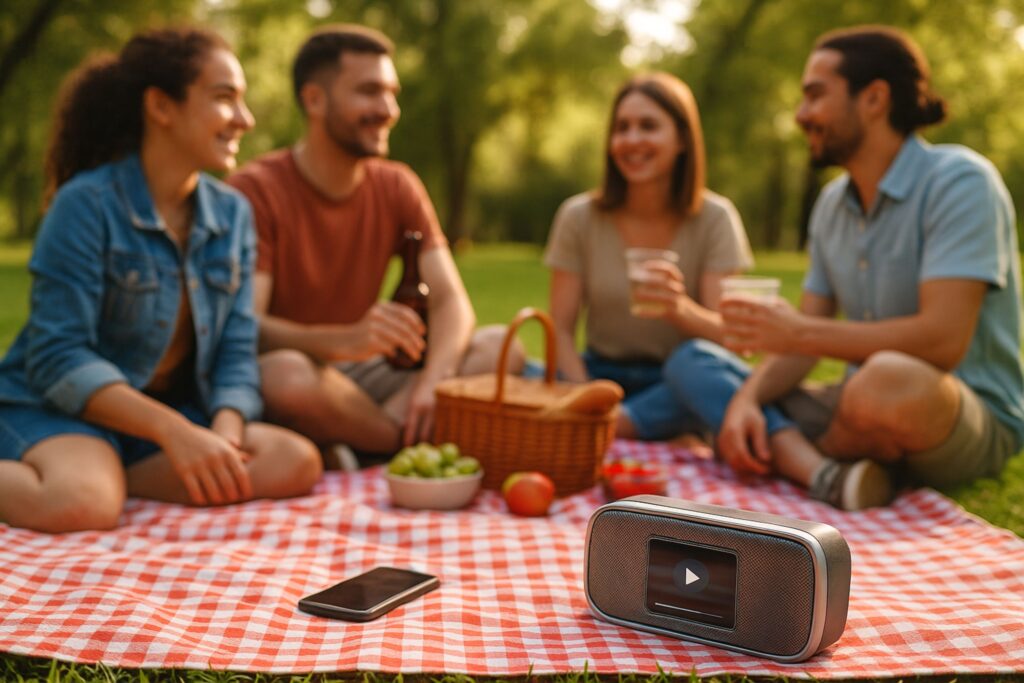
The safest and most enjoyable volume for a picnic playlist is around 60–70 decibels, roughly the sound level of normal conversation. At this range, music adds atmosphere without overpowering speech or the natural sounds around you.
Guests can still chat comfortably without raising their voices, and the playlist supports the mood rather than becoming a distraction.
Keeping sound under 70 dB is also important for hearing health. Long exposures to sound above this level may start to affect the ears, even outdoors.
A picnic setting works best when the music feels like background, not a performance.
When does volume become harmful to hearing in outdoor settings?
Volume becomes risky once it passes 85 dB—a level at which long exposure can cause damage. This is the threshold used in workplace safety guidelines. While a picnic doesn’t last eight hours every time, it’s still wise to avoid creeping into unsafe ranges.
Outdoor music festivals often exceed 90 or even 100 dB, which is why earplugs are recommended at those events.
For a picnic, the goal is the opposite: keep the sound safe and relaxed. Anything that forces people nearby to shout to be heard is already too loud.
How long can you safely listen at different decibel levels outdoors?
Safe listening time depends directly on volume. At 85 dB, the maximum safe exposure is about eight hours. Every 3-decibel increase cuts that time in half. At 88 dB, it drops to four hours; at 91 dB, only two hours. By 100 dB, safe time falls to about 15 minutes.
At a picnic, keeping the playlist at 60–70 dB means you can enjoy music all afternoon without concern. It also ensures people can still interact naturally, and children or older guests aren’t overwhelmed by the sound.
How do you measure and monitor volume effectively during a picnic outdoors?
Measuring sound levels doesn’t require professional equipment. Many smartphones have sound meter apps that give accurate readings in decibels. These tools let you quickly check if your playlist is staying in the safe range.
A practical rule of thumb works just as well: if you need to raise your voice to speak to someone an arm’s length away, the music is likely above 85 dB. In a picnic setting, that means it’s already louder than it should be.
Positioning speakers a little farther from the group and facing them away from direct seating areas also helps distribute sound more gently.
How can you keep an outdoor picnic enjoyable, safe, and sociable?
The simplest way is to set a target of 60–70 dB and keep it there. That level allows music to flow without overpowering. Position your speaker closer to the group so the sound doesn’t have to be pushed as high.
Another strategy is to take breaks. Lower the volume every hour for 10–15 minutes. This helps avoid fatigue and lets people appreciate both the music and the quiet.
Finally, consider the space around you. If you’re at a public park, other groups may be nearby. A polite, balanced volume shows respect for their experience, too.
How does music volume differ at an indoor picnic?
Indoor sound behaves very differently from outdoor sound. Unlike open spaces, walls, ceilings, and floors reflect sound, making music feel louder even at the same decibel reading.
A playlist set at 70 dB indoors may seem more intense than it would in a park, because reverberation amplifies the perception of loudness.
In indoor spaces, especially small rooms or halls, the ideal range is slightly lower—55–65 dB. This keeps music soft enough to avoid echo while still being audible to everyone in the room.
Lowering the bass also helps, since low frequencies resonate more indoors and can easily overwhelm conversation.
What extra precautions are needed for indoor picnic playlists?
- Choose balanced speakers: Smaller Bluetooth speakers or multi-directional models distribute sound better indoors than large, single-source speakers.
- Mind the room size: In compact rooms, even moderate levels carry strongly. Start lower and adjust only if needed.
- Respect shared walls: In apartments or community halls, sound leaks through walls and floors. Keeping music under 60 dB avoids disturbing neighbors.
- Control echoes: Soft furnishings, rugs, or curtains reduce reflections and make music feel gentler.
Why is indoor listening fatigue more common?
Because reflections make sound more concentrated, people indoors experience listening fatigue faster. Even if the playlist isn’t technically unsafe, the constant background echo can tire the ears. Guests may feel the need for longer quiet breaks compared to outdoor gatherings.
For this reason, indoor playlists should aim for the lower end of the safe range—closer to 55–60 dB—especially during long events.
Safe Volume Levels for Picnic Playlists
A picnic playlist should create an atmosphere without overwhelming conversation or the environment.
Outdoors, the safe range is 60–70 dB, while indoors it should be slightly lower, 55–65 dB, due to sound reflections. Anything above 85 dB risks hearing damage over time and can spoil the social mood of a gathering.
Safe Listening Table for Picnic Playlists
| Setting | Ideal Volume Range | Feels Like | Safe Listening Time | Key Tips |
| Outdoor Picnic | 60–70 dB | Normal conversation level | All afternoon safely | Keep music as background; avoid forcing guests to shout |
| Indoor Picnic | 55–65 dB | Slightly softer than speech | Unlimited at lower range | Reduce bass, manage echoes, respect neighbors |
| Above 80 dB | Loud café/traffic | Noticeably intrusive | A few hours at most | Guests may complain; turn down before fatigue sets in |
| 85+ dB | Busy city street | Harmful with long exposure | 8 hours at 85 dB, less at higher levels | Avoid at picnics; risk to hearing health |
| 100 dB+ | Concert level | Overpowering, unsafe | 15 minutes max | Never suitable for picnic settings |
A picnic playlist works best when it feels like a background layer, not the main event. By keeping sound between 55 and 70 dB, depending on whether you’re indoors or outdoors, you protect hearing health, maintain comfort, and show courtesy to those around you.
For more tips on keeping your gatherings stress-free, check out these smart picnic organization hacks to save time.
FAQs
How does outdoor background noise affect picnic playlist volume?
Wind, traffic, and nearby voices can mask music, tempting you to raise the volume. Instead of increasing sound levels, position speakers closer to listeners to maintain clarity without exceeding safe decibel ranges.
What type of speaker is best for controlled sound at a picnic?
Portable speakers with directional sound and built-in volume limiters are best. They allow you to direct music toward your group without spreading loud noise across the park.
Does music genre change how loud it feels outdoors?
Yes. Bass-heavy genres like hip-hop or EDM feel louder at lower decibels compared to acoustic or classical music. Choosing balanced genres helps maintain comfort at moderate volume.
Are children more sensitive to picnic music volume than adults?
Children’s ears are more vulnerable to sound damage. What feels comfortable to adults at 75 dB may still strain younger ears. Always adjust volume with kids in mind.
How do park rules influence picnic playlist loudness?
Many parks and beaches have noise ordinances, often capping amplified sound around 70 dB. Exceeding this can result in fines or removal, so knowing local regulations is crucial.
Can multiple speakers make music safer at lower volumes?
Yes. Placing two or three smaller speakers around the picnic area spreads sound evenly. This avoids blasting one speaker at a high volume and keeps the experience comfortable.
How does speaker placement affect perceived loudness?
Placing a speaker on the ground disperses sound differently than raising it on a table. Elevated placement can feel louder without needing higher volume, improving both clarity and efficiency.
What role does time of day play in acceptable music volume?
Morning and late evening often have stricter community expectations for quiet. Mid-afternoon is generally the most acceptable time for moderate music at public gatherings.
Can outdoor weather change how loud music seems?
Yes. Humidity and temperature affect sound travel. On cool, still days, music carries farther, so even moderate volume may be heard at a distance.
How can you balance music with natural sounds at a picnic?
Keep volume low enough to allow birdsong, waves, or wind to remain audible. Music should complement, not erase, the natural setting of a picnic.
Is headphone use a better option for picnic playlists?
Headphones avoid disturbing others, but they isolate guests from social interaction. If used, keep one earbud out for conversation and safety awareness.
How does group size influence safe picnic playlist loudness?
Larger groups may call for slightly higher volume so everyone hears. Instead of turning up one speaker, distribute multiple speakers to maintain safe listening levels.
Can older adults be more affected by loud picnic music?
Yes. Older guests often experience age-related hearing loss or sensitivity. Music that feels acceptable to younger listeners can be uncomfortable or disorienting to seniors.
Are rechargeable speakers safer for volume control than wired systems?
Portable Bluetooth speakers generally have power limitations that naturally cap their maximum volume. Large wired systems can exceed safe outdoor levels more easily.
What’s the difference between indoor and outdoor safe music levels?
Indoors, sound bounces off walls, amplifying volume. Outdoors, it disperses quickly. However, outdoor music can still travel far, so safe levels should remain consistent at around 70 dB.
How does bass frequency impact picnic listening comfort?
Low frequencies travel farther and penetrate more deeply than treble. Heavy bass at moderate dB can feel intrusive to nearby groups, so balancing equalizer settings is important.
Can pets at a picnic be affected by loud music?
Yes. Dogs and cats have more sensitive hearing ranges than humans. Even moderate human-safe levels may stress animals, so keep music softer when pets are present.
What’s the role of speaker quality in perceived loudness?
High-quality speakers provide clearer sound at lower volumes. Poor quality speakers distort easily, tempting users to increase volume, which risks exceeding safe limits.
Do local cultural norms affect picnic music expectations?
Yes. Some countries or communities welcome background music in public spaces, while others view it as intrusive. Always consider local etiquette before setting volume.
Is it safer to use playlists designed for background listening?
Yes. Many streaming platforms offer “chill,” “lounge,” or “dinner” playlists mixed at consistent levels. These tracks reduce sudden volume spikes and keep listening safe for long durations.PS:If you notice any outdated information or an official update on safe listening standards, please let us know so we can revise this guide and keep it accurate.
✨ Love picnics as much as we do?
Join our community and get fresh picnic ideas, tips, and inspiration straight to your inbox. No spam, just simple ways to make every picnic special. 🌿🍓