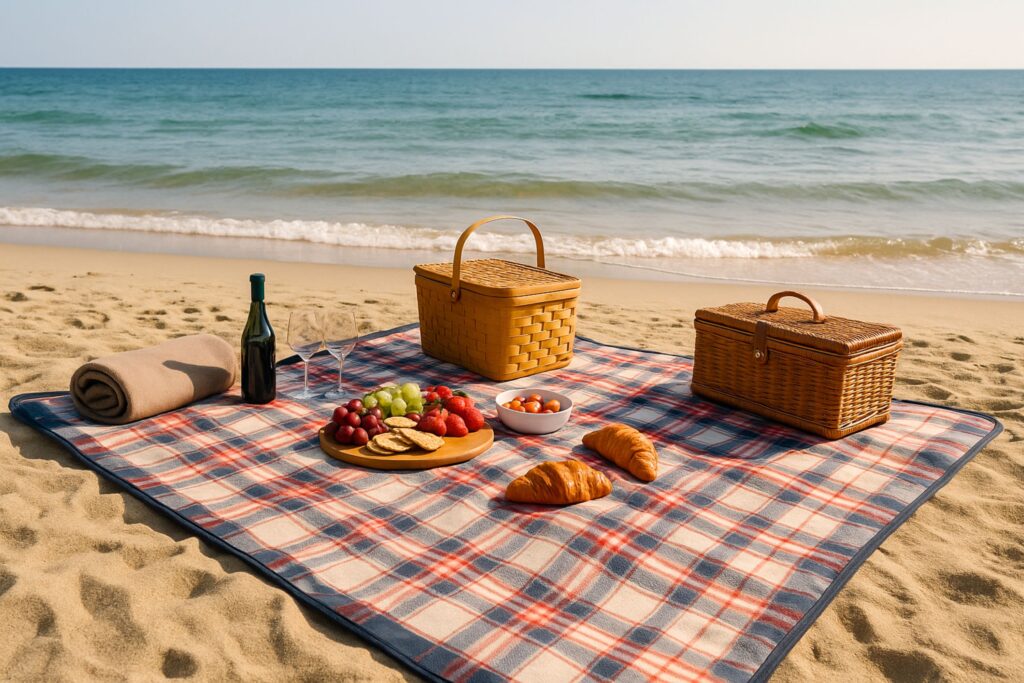
A picnic blanket can absolutely be used on the beach if it’s designed to handle moisture, sand, and heat. The most suitable options have a waterproof base, a quick-drying surface, and a sand-resistant weave that keeps the top layer clean and comfortable.
Unlike traditional picnic rugs meant for grassy parks, beach-ready blankets use materials such as ripstop nylon, polyester, or microfiber fleece that don’t absorb water or trap grains of sand. Features like corner anchors, weighted edges, and UV-resistant coatings make them durable under strong sunlight and wind.
With these design elements, a picnic blanket becomes more than a ground cover — it turns into a practical and stylish beach essential for lounging, dining, or relaxing by the shore.
What features should a picnic blanket have to work well on sand and near water?
A beach-ready picnic blanket should include a waterproof base layer, a sand-repellent surface, and anchoring features such as corner loops, stakes, or sand pockets to keep it stable in coastal wind. The best designs are lightweight, quick-drying, and fold compactly for easy transport.
Brands such as VOITED, Wekapo, and CGear Sand-Free use PU-coated polyester or TPU-laminated nylon to prevent moisture from seeping through and to resist abrasion from sand.
CGear’s patented dual-layer mesh allows sand to pass downward while blocking it from resurfacing — a proven sand-free technology that originated in military field mats. Surfaces made of microfiber polyester or ripstop nylon shed sand easily and stay comfortable under the sunlight, especially in lighter colors that reflect heat.
Many modern blankets also feature weighted corners or built-in sand pockets, which help reduce flapping and keep the blanket in place.
Together, these functional details transform a standard picnic rug into a versatile outdoor blanket ideal for beaches, parks, and camping areas.
What materials are ideal for picnic blankets used at the beach?
The best picnic blankets for beach use strike a balance between durability, comfort, and effective waterproofing. The bottom layer should be made from polyester or nylon with a PU (polyurethane) or TPU (thermoplastic polyurethane) coating, which provides a solid waterproof barrier and resists damage from saltwater exposure.
These synthetic fabrics are preferred because they are quick-drying, lightweight, and easy to clean, compared to heavier options like cotton or wool.
The top layer can be crafted from microfiber fleece, polyester Oxford, or a woven cotton–polyester blend, offering softness while allowing sand to brush off easily.
Many high-quality manufacturers — including Matador, Scuddles, and Little Unicorn — use multi-layer construction consisting of:
- a comfortable upper surface for sitting or lounging,
- a thin foam or insulating middle layer for cushioning, and
- a waterproof backing for protection from wet or sandy ground.
This three-layer design keeps the blanket moisture-proof, sand-resistant, and long-lasting, even with frequent use in sunny, salty environments.
What thickness or padding is suitable for a beach picnic blanket?
For the beach, thin to medium thickness (around 2–4 mm) is ideal. Thick padding is unnecessary because sand naturally provides cushioning. A thinner layer prevents overheating and makes the blanket lighter to carry.
Choose a compact, foldable design such as a mat-style beach blanket instead of a bulky quilted picnic rug. Some hybrid models include a thin foam insert for comfort without trapping heat.
This design is ideal for beach picnics, music festivals, and outdoor yoga sessions where portability takes precedence over plushness.
How do you anchor or secure a picnic blanket so it doesn’t blow away at the beach?
Strong winds are one of the biggest challenges when setting up a picnic on the beach, so proper anchoring is essential. To keep your blanket stable, use corner stakes, sand pockets, or loop anchors.
Many beach picnic blankets, such as the Wekapo Sand Proof Beach Blanket and the WildHorn Outfitters Sand Escape Mat, include built-in sand pockets that double as weights and also come with stakes for added security.
If your blanket doesn’t have anchors, bring light tent pegs or fill small resealable bags with sand to weigh the corners.
You can also clip the edges to nearby items, such as coolers, beach chairs, or umbrella poles.
These simple techniques prevent your blanket from shifting, folding, or catching wind, keeping your picnic setup neat, level, and sand-free throughout the day.
How easily can sand be removed from the blanket?
The most effective sand-proof picnic blankets are made from tightly woven ripstop nylon or microfiber polyester, which naturally repel fine sand. Unlike cotton or wool, these materials don’t trap grains inside the fibers, making cleanup quick and effortless.
Blankets featuring CGear Sand-Free technology use a dual-layer mesh system — the top layer allows sand to fall through, while the lower layer prevents it from coming back up.
Initially developed for military and aviation use, this design keeps surfaces clean even on beaches with fine, dry sand. For single-layer models made from parachute nylon, a simple shake or brush is usually enough to obliterate sand.
These sand-resistant fabrics make it easy to pack up after a beach day, keeping your car, bags, and picnic gear free from debris.
How does a picnic blanket perform on damp sand?
The performance of a picnic blanket on wet sand depends on the quality of its waterproof layer. Blankets backed with PEVA, PU (polyurethane), or TPU (thermoplastic polyurethane) coatings stay dry on top even when placed on moist ground.
These materials serve as a moisture barrier, preventing water from seeping through and maintaining a comfortable surface.
High-quality blankets also feature edge-to-edge lamination or heat-sealed seams, which stop leaks through stitching holes. Brands such as WildHorn Outfitters and MIU COLOR use these methods to ensure reliable waterproof protection.
When purchasing, verify that the product is labeled as “100% waterproof” rather than “water-resistant.” Only fully waterproof backings prevent seepage when you sit or lean on damp sand. This feature also helps prevent mold, odors, and moist spots, extending the life of your outdoor blanket.
What is the difference between a beach blanket and a picnic blanket?
A beach blanket is designed to withstand sand, wind, and moisture, whereas a picnic blanket is primarily intended for use on dry grass or solid ground.
Beach blankets are typically made from synthetic fabrics, such as ripstop nylon, parachute fabric, or polyester, which are lightweight, quick-drying, and sand-repellent.
Picnic blankets, on the other hand, often have padded fleece or cotton tops that offer softness but tend to absorb moisture and trap sand.
Modern hybrid designs combine the best of both. Brands like VOITED, Scuddles, and MIU COLOR make dual-sided outdoor blankets with a soft fleece or microfiber top and a waterproof polyester or PEVA backing.
These models are versatile enough for use in parks, on beaches, at picnics, or on camping trips.
When shopping, look for descriptions such as “outdoor blanket,” “beach mat,” or “camping rug.” These multi-purpose options offer both comfort and durability, making them a wise choice for a variety of outdoor activities.
What compromises exist when selecting a blanket for both park and beach use?
A hybrid outdoor blanket offers comfort, waterproofing, and portability, but it also comes with small trade-offs. A fleece top feels soft on grass but can collect sand, while a ripstop nylon surface is sand-resistant and dries fast but feels less cozy.
For a blanket that works well in both settings, choose a lightweight waterproof design with a microfiber or ripstop polyester surface and a PU or TPU-coated base. This mix keeps it durable, easy to clean, and comfortable on different surfaces.
Models such as the Matador Pocket Blanket and the MIU COLOR Outdoor Blanket fold into compact sizes yet still provide excellent water resistance — ideal for both city parks and beach picnics.
A well-made waterproof blanket keeps you comfortable, dry, and protected from heat or sand, making outdoor time cleaner and more enjoyable.
How do you clean and maintain a picnic blanket after using it at the beach?
After a beach picnic, shake the blanket to remove sand, rinse it with fresh water, and let it air-dry completely. This prevents salt buildup, odors, and mold.
Blankets made from nylon, polyester, or microfiber fleece can usually be machine-washed on a gentle cycle using cold water and mild detergent. Avoid using bleach and high heat, as they can damage waterproof coatings such as PU or TPU.
To maintain protection, apply a durable water-repellent (DWR) spray when the surface stops beading water.
Finally, roll or fold the blanket loosely before storing it in a dry place. With the proper care, your picnic blanket will stay clean, waterproof, and ready for years of outdoor use.
How durable are waterproof coatings under sun, salt, and sand exposure?
Durability depends on the type and quality of the coating. Thermoplastic polyurethane (TPU) and silicone-based membranes generally outperform polyurethane (PU) in long-term beach use because they resist UV degradation and salt corrosion better.
Prolonged sunlight and abrasion from sand can gradually wear away coatings, causing micro-cracks that allow water to seep through. Premium models, such as VOITED Recycled Ripstop Blanket or WildHorn Outfitters Sand Escape Mat, utilize UV-stabilized waterproof layers to prevent damage.
Rinsing blankets after saltwater contact and storing them in shade helps maintain elasticity and avoid brittleness.
If a blanket starts feeling sticky or loses its slick underside, that’s a sign the waterproof membrane is breaking down and may need a re-coating or replacement.
What safety and comfort factors should you consider when using a picnic blanket on the beach?
Comfort and safety depend on surface temperature, color choice, and the presence of a non-slip backing. Dark colors like navy or black absorb heat quickly and can become hot to sit on. Light or reflective colors — such as sand, aqua, or gray — stay cooler under direct sunlight.
For family use, especially with children, opt for non-toxic, BPA-free materials and avoid PVC with harmful additives. Some cheaper waterproof picnic rugs use low-grade vinyl that emits odors and can heat excessively.
Modern eco-friendly alternatives, such as TPU coatings and PEVA films, are safer and softer.
Non-slip silicone or textured backing also prevents sliding on uneven sand. Extra padding near the corners or under the knees can improve stability, especially for beach picnics with toddlers or outdoor yoga sessions.
What is the best size and shape of a picnic blanket for the beach?
The ideal beach picnic blanket size depends on how many people will use it and what you plan to do. For solo travelers or couples, a blanket measuring approximately 150 × 200 cm provides sufficient space for two people and their essentials.
For families or larger groups, choose a size of 200 × 220 cm or more to fit kids comfortably, food, and beach gear.
Most beach blankets are rectangular because this shape is easy to pack, fold, and fit into carry bags. However, round picnic blankets — such as those from Sand Cloud or Roundie Co. — have become popular for their bohemian look and 360° coverage, making them ideal for lounging and taking photos.
Whichever style you choose, make sure the blanket folds compactly and fits into its own carry pouch or strap bag.
Larger surface coverage offers better protection from blowing sand and helps keep your food and towels separate from wet sand near the waterline.
Can salt and sun exposure affect the lifespan of a picnic blanket?
Yes. Saltwater and UV exposure are two of the main factors that shorten a blanket’s lifespan. Salt crystals can dry inside the fibers, causing stiffness and a rough texture, while ultraviolet rays weaken the fabric, fade colors, and degrade waterproof coatings over time.
To prevent this, rinse your blanket with fresh water after each beach trip and air-dry it in the shade, rather than under direct sunlight. This helps maintain the color and elasticity of the fabric.
Blankets made from UV-protected polyester or solution-dyed acrylic fibers, such as those used in Sunbrella fabrics, are the most durable — they retain their color, softness, and waterproofing even after years of exposure to sun and salt.
Choosing a UV-resistant, quick-drying outdoor blanket not only extends its life but also ensures it stays comfortable and vibrant for many beach seasons to come.
Are there eco-friendly waterproof picnic blankets for the beach?
Yes — many brands now produce eco-friendly waterproof picnic blankets made from recycled plastic bottles (rPET) or organic cotton blends coated with non-toxic waterproof materials.
Companies such as VOITED, Rumpl, and Nomadix are leading this sustainable shift. They use recycled polyester fabrics combined with Bluesign-approved TPU coatings or fluorine-free DWR finishes to eliminate harmful chemicals, such as PFAS (per- and polyfluoroalkyl substances).
These innovations make their products durable, water-resistant, and environmentally responsible.
Eco-conscious designs often feature recyclable packaging, vegan leather carry straps, and carbon-neutral shipping, appealing to travelers who seek high performance without compromising the environment.
Choosing an eco waterproof picnic blanket reduces plastic waste while supporting responsible manufacturing and long-lasting outdoor gear.
Can you make a regular picnic blanket more suitable for beach use?
Yes — with a few DIY modifications, a regular picnic blanket can be easily adapted for the beach. You can add corner loops and use tent stakes or clips to anchor it, or sew small sand pockets at the corners to keep it in place on windy days.
To improve waterproofing, place a PEVA, PU, or TPU liner underneath your blanket. If you don’t have one, a foldable tarp or emergency foil mat works just as well to block moisture from damp sand.
For easier cleanup, lightly sprinkle baby powder around the edges before folding — it helps loosen and remove any remaining sand.
Finally, store your blanket in a mesh beach bag so excess sand can fall out naturally.
These minor upgrades can turn an ordinary picnic blanket into a functional, beach-ready companion that’s comfortable, practical, and easy to maintain.
Choosing the Right Picnic Blanket and Planning Your Next Beach Picnic
Choosing the right picnic blanket for the beach transforms your day by the sea into a comfortable and effortless experience. The ideal blanket combines waterproof protection, sand resistance, and lightweight packability, ensuring your beach setup stays clean, cool, and cozy.
Whether you prefer modern synthetics or eco-friendly options, the right materials make all the difference in comfort and durability.
If you’re curious about natural fibers, explore why 100% wool blankets are good for picnics and how they perform outdoors. Wool’s natural breathability and moisture control can make it surprisingly comfortable on cooler coastal days, offering an elegant alternative to synthetic beach blankets.
For sustainability-minded travelers, it’s worth learning how recycled wool picnic blankets compare to new wool in softness, strength, and long-term durability. These modern recycled designs prove that you can enjoy both comfort and environmental responsibility without compromise.
When planning your setup, consider what cozy picnic seating works for sandy beaches. Low-profile chairs, inflatable loungers, or foldable floor cushions keep you elevated above the sand while maintaining comfort and stability. Pairing them with your waterproof blanket creates the perfect lounging zone for reading, dining, or simply enjoying the ocean view.
If you’re planning your next seaside gathering, take inspiration from our beach picnic ideas, where we explore how to style your setup, pack efficiently, and choose accessories that perfectly match your beach blanket and destination vibe.
FAQs
1. What makes a blanket “sand-free,” and how does sand-free technology work?
A sand-free blanket uses a dual-layer mesh or tightly woven synthetic material that allows sand to fall through the top layer while preventing it from resurfacing. This design utilizes hydrophobic fibers, such as ripstop nylon or micro-weave polyester, which shed moisture and resist static cling. CGear, initially developed for military use, pioneered this technology to keep the surface clean, even on fine-sand beaches and in windy conditions.
2. Are waterproof picnic blankets breathable, or do they trap heat?
Most waterproof picnic blankets utilize polyurethane (PU) or thermoplastic polyurethane (TPU) coatings or laminates that effectively block water. Some of these membranes are moisture-vapor-permeable, but non-breathable versions can trap heat when exposed to intense sunlight.
To stay comfortable, opt for light-colored designs and avoid fully sealed plastic-sheet styles for extended lounging sessions. Soft tops made of microfiber fleece or ventilated mesh also improve airflow and cooling.
3. Can I use a beach towel instead of a picnic blanket?
A beach towel absorbs water but lacks the waterproof backing, size, and stability of a picnic blanket. Towels tend to collect sand and dry slowly, while beach mats and outdoor blankets are built with sand-resistant and quick-drying fabrics. For a minimalist setup, place a towel over a thin waterproof picnic blanket to combine absorbency with moisture protection.
4. How does wind resistance differ between beach mats and picnic blankets?
Beach mats often feature sand pockets, corner loops, or built-in stakes made of nylon or parachute fabric for stability in coastal winds. Traditional picnic blankets rely more on their weight.
Wind-resistant designs, such as the Matador Pocket Blanket, Wekapo Beach Blanket, or WildHorn Sand Escape, distribute air pressure evenly through a flat, tensioned surface and can be anchored with sand or pegs to prevent billowing.
5. What are the best storage practices for waterproof picnic blankets after the beach?
After rinsing away saltwater and sand, let your blanket air-dry completely before folding. Store it loosely rolled in a breathable mesh bag to avoid mildew. Never seal a damp blanket inside plastic. For long-term storage, keep it away from direct sunlight or heat sources, which can degrade the PU/TPU waterproof coating. Proper care maintains both the waterproof integrity and the flexibility of the fabric.
6. Is there a difference between outdoor picnic rugs and waterproof travel mats?
Yes. Outdoor picnic rugs prioritize comfort and aesthetics, often featuring soft fleece or woven tops. Waterproof travel mats emphasize durability, compact folding, and weather protection. Examples include the Matador Pocket Blanket—a palm-size, stake-ready groundsheet—and Sea to Summit’s Ultra-Sil Nano Tarp Poncho, which doubles as a lightweight shelter.
Picnic rugs are ideal for relaxed family picnics, while travel mats are suited for hikers and minimalist travelers.
7. Do waterproof picnic blankets lose effectiveness after several washes?
Yes. The durable water-repellent (DWR) finish, which beads water, can weaken after repeated washing or high-heat drying. To extend lifespan, wash gently with mild detergent in cold water, then air-dry.
You can restore repellency using DWR sprays such as Nikwax TX.Direct or Granger’s Performance Repel Plus. Re-proofing every few months keeps your blanket water-shedding and salt-resistant.
8. Can you use a waterproof picnic blanket as a temporary beach shelter?
Large water-resistant or waterproof outdoor blankets can serve as makeshift sunshades or windbreaks when secured with poles or clips. The PU or TPU backing resists moisture and wind. Multipurpose models, such as the VOITED Trooper Poncho-Blanket, feature snap buttons and corner loops that enable quick conversion into a lightweight tarp or wearable cover for beach or campsite use.
9. What eco-friendly alternatives exist for synthetic beach blankets?
Sustainable options include recycled polyester (rPET), organic cotton canvas coated with non-toxic PEVA, and bamboo-fiber blends. Brands such as Rumpl, VOITED Eco Series, and Nomadix utilize PFAS-free DWR coatings, recyclable packaging, and carbon-neutral production methods.
These eco picnic blankets maintain water resistance and sand repellency while reducing plastic waste and chemical pollution.
10. How can I choose a beach picnic blanket that stays cool under the sun?
Select light-colored, breathable fabrics such as polyester Oxford or ripstop nylon, which reflect sunlight better than dark fleece. For radiant-heat control, use a reflective tarp or canopy overhead rather than relying on an aluminized underlayer, which is rare in consumer beach blankets. Cooling-focused models from Wekapo, WildHorn Outfitters, and VOITED combine UV-resistant coatings with quick-drying textures for comfort on hot sand.
✨ Love picnics as much as we do?
Join our community and get fresh picnic ideas, tips, and inspiration straight to your inbox. No spam, just simple ways to make every picnic special. 🌿🍓